Introduction to Spicy Korean-style vegetable bibimbap
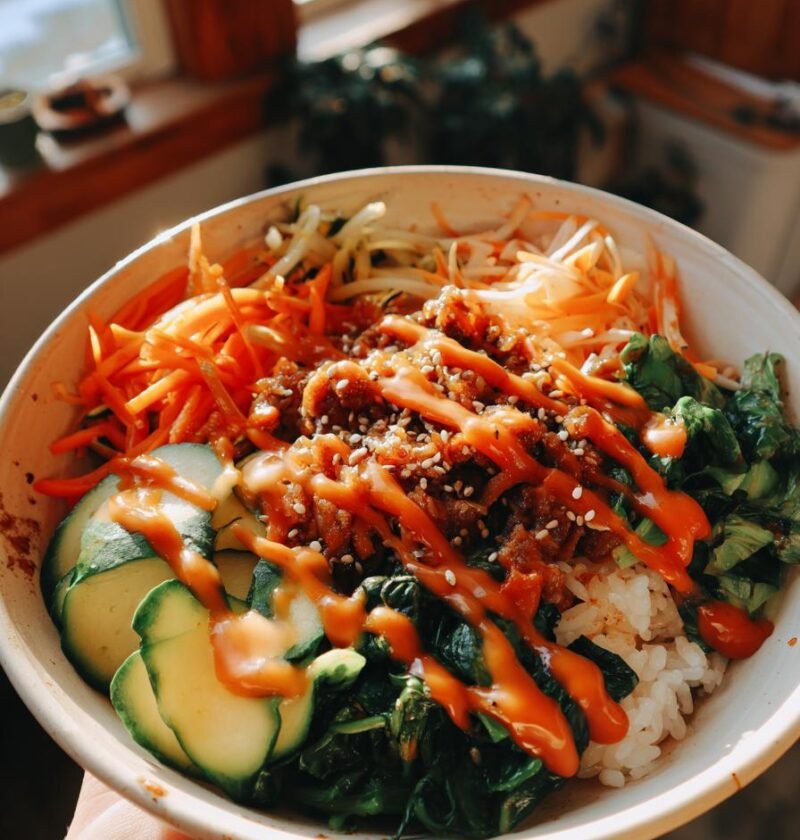
Welcome to the vibrant world of Spicy Korean-style vegetable bibimbap! If you’re like me, juggling a busy schedule while trying to whip up something delicious can feel overwhelming. This dish is a delightful solution, bursting with colors and flavors that will impress your loved ones without taking hours in the kitchen. Imagine a bowl filled with perfectly cooked rice, fresh vegetables, and a spicy kick that dances on your taste buds. It’s not just a meal; it’s an experience that brings joy to your table, making it perfect for any occasion!
Why You’ll Love This Spicy Korean-style vegetable bibimbap
This Spicy Korean-style vegetable bibimbap is a game-changer for busy moms and professionals alike. It’s quick to prepare, taking just 30 minutes from start to finish. The vibrant flavors and textures make every bite a delight, while the colorful presentation is sure to impress. Plus, it’s a fantastic way to sneak in those veggies, making it a nutritious choice for the whole family. You’ll love how easy it is to customize!
Ingredients for Spicy Korean-style vegetable bibimbap
Gathering the right ingredients is key to creating a delicious Spicy Korean-style vegetable bibimbap. Here’s what you’ll need:
- Cooked rice: The base of your bibimbap. I prefer short-grain rice for its sticky texture, but any rice will do.
- Spinach: Blanched for a tender bite. It adds a lovely green color and is packed with nutrients.
- Bean sprouts: These crunchy little gems bring a refreshing crunch. They’re also a great source of protein!
- Carrot: Julienned for a sweet, crisp texture. It adds a pop of color and a hint of sweetness.
- Zucchini: Also julienned, it’s mild and absorbs flavors beautifully, making it a perfect addition.
- Shiitake mushrooms: Sliced for an earthy flavor. They add depth and a meaty texture to the dish.
- Sesame oil: This fragrant oil enhances the dish with a nutty aroma. A little goes a long way!
- Gochujang: The star of the show! This Korean chili paste brings the heat and a touch of sweetness.
- Soy sauce: For a savory depth. It balances the spice of the gochujang perfectly.
- Sugar: Just a teaspoon to round out the flavors. It helps to mellow the spice.
- Sesame seeds: These tiny seeds add a delightful crunch and nutty flavor when sprinkled on top.
- Eggs (optional): Fried sunny-side up, they add richness and a beautiful finish to your bibimbap.
Feel free to mix and match vegetables based on what you have on hand or your family’s preferences. You can find the exact quantities for each ingredient at the bottom of the article, ready for printing!
How to Make Spicy Korean-style vegetable bibimbap
Step 1: Prepare the Rice
Start by cooking your rice according to the package instructions. I usually opt for short-grain rice, as it becomes wonderfully sticky. This texture helps hold everything together in your bibimbap. Once cooked, fluff it with a fork and set it aside to cool slightly. Trust me, the rice is the heart of this dish!
Step 2: Blanch the Vegetables
Next, bring a pot of water to a boil. Blanch the spinach and bean sprouts for just 1-2 minutes. This quick dip in boiling water brightens their colors and softens them just enough. Afterward, drain and rinse them under cold water to stop the cooking process. This step keeps your veggies vibrant and fresh!
Step 3: Sauté the Vegetables
In a large pan, heat the sesame oil over medium heat. Add the julienned carrots, zucchini, and sliced shiitake mushrooms. Sauté them for about 5-7 minutes until they’re tender but still have a bit of crunch. The aroma will fill your kitchen, making it hard to resist sneaking a taste!
Step 4: Make the Spicy Sauce
While the veggies are cooking, let’s whip up the spicy sauce. In a small bowl, mix together the gochujang, soy sauce, and sugar. This sauce is the magic that ties everything together. Adjust the gochujang to your spice preference. If you like it hot, go for more!
Step 5: Assemble the Bibimbap
Now comes the fun part! In a bowl, place a generous serving of rice as your base. Arrange the sautéed vegetables, blanched spinach, and bean sprouts on top in a colorful display. Drizzle the spicy sauce over everything, letting it cascade down like a flavorful waterfall. If you’re feeling fancy, add a fried egg on top for extra richness!
Step 6: Garnish and Serve
Finally, sprinkle sesame seeds over your beautiful creation. This adds a delightful crunch and a nutty flavor. Serve your Spicy Korean-style vegetable bibimbap immediately, and watch as everyone digs in with excitement. Enjoy the vibrant flavors and the joy of sharing this dish with your loved ones!
Tips for Success
- Prep your ingredients ahead of time to save precious minutes during cooking.
- Use leftover rice for a quicker meal; it works just as well!
- Don’t skip the rinsing step after blanching; it keeps veggies crisp and colorful.
- Experiment with different vegetables based on the season or what’s in your fridge.
- Adjust the spice level by varying the amount of gochujang to suit your family’s taste.
Equipment Needed
- Large pot: For blanching vegetables. A deep skillet works too!
- Large pan: Ideal for sautéing. A wok can add a fun twist!
- Mixing bowls: For preparing the spicy sauce. Any bowl will do!
- Cooking utensils: A spatula or wooden spoon for stirring.
- Measuring spoons: Helpful for precise ingredient amounts.
Variations of Spicy Korean-style vegetable bibimbap
- Protein Boost: Add grilled chicken, beef, or tofu for a heartier meal. It’s a great way to customize for meat lovers or vegetarians!
- Different Grains: Swap out rice for quinoa or brown rice for a nutty flavor and added nutrition. It’s a fun twist on the classic!
- Spicy Twist: Mix in some kimchi for an extra kick. This fermented delight adds depth and a tangy flavor that’s hard to resist.
- Seasonal Veggies: Use whatever vegetables are in season. Think bell peppers in summer or root vegetables in winter for a fresh take.
- Vegan Delight: Omit the egg and use a vegan gochujang to make this dish completely plant-based. It’s just as delicious!
Serving Suggestions for Spicy Korean-style vegetable bibimbap
- Side Dishes: Pair with kimchi or pickled vegetables for a tangy contrast.
- Drinks: Serve with a refreshing iced green tea or a light beer to complement the spice.
- Presentation: Use colorful bowls to showcase the vibrant ingredients, making it visually appealing.
- Garnish: Add fresh herbs like cilantro or green onions for an extra pop of flavor.
FAQs about Spicy Korean-style vegetable bibimbap
Can I make Spicy Korean-style vegetable bibimbap ahead of time?
Absolutely! You can prepare the vegetables and sauce in advance. Just store them separately in the fridge. When you’re ready to eat, simply reheat the rice and assemble your bibimbap. It’s a great way to save time on busy days!
Is Spicy Korean-style vegetable bibimbap gluten-free?
To make this dish gluten-free, use tamari instead of soy sauce. Gochujang can also contain gluten, so look for a gluten-free version. With these swaps, you can enjoy a delicious gluten-free bibimbap!
What can I substitute for gochujang?
If you can’t find gochujang, you can use a mix of red pepper flakes and a bit of honey or sugar for sweetness. It won’t be exactly the same, but it will still add a nice kick to your dish!
Can I add meat to my bibimbap?
Definitely! Grilled chicken, beef, or even shrimp can elevate your Spicy Korean-style vegetable bibimbap. Just cook the protein separately and add it on top of the vegetables for a heartier meal.
How can I adjust the spice level?
To control the spice, simply adjust the amount of gochujang in your sauce. Start with a small amount and taste as you go. You can always add more if you like it hotter!
Final Thoughts
Creating Spicy Korean-style vegetable bibimbap is more than just cooking; it’s about bringing joy to your table. Each vibrant ingredient tells a story, and every bite is a celebration of flavors. This dish is perfect for busy days, yet it feels special enough for gatherings. I love how it encourages creativity, allowing you to mix and match vegetables based on what you have. Plus, it’s a fantastic way to introduce your family to new tastes. So, roll up your sleeves, gather your loved ones, and enjoy the delightful experience of making and sharing this colorful meal!
PrintSpicy Korean-style vegetable bibimbap: Taste the Excitement!
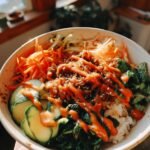
Spicy Korean-style vegetable bibimbap is a vibrant and flavorful dish that combines a variety of vegetables, rice, and a spicy sauce, making it a delightful meal for any occasion.
- Prep Time: 15 minutes
- Cook Time: 15 minutes
- Total Time: 30 minutes
- Yield: 2 servings 1x
- Category: Main Dish
- Method: Stir-fry
- Cuisine: Korean
- Diet: Vegetarian
Ingredients
- 2 cups cooked rice
- 1 cup spinach, blanched
- 1 cup bean sprouts, blanched
- 1 carrot, julienned
- 1 zucchini, julienned
- 1 cup shiitake mushrooms, sliced
- 2 tablespoons sesame oil
- 2 tablespoons gochujang (Korean chili paste)
- 1 tablespoon soy sauce
- 1 teaspoon sugar
- 1 tablespoon sesame seeds
- 2 eggs (optional)
Instructions
- Prepare the rice according to package instructions and set aside.
- Blanch the spinach and bean sprouts in boiling water for 1-2 minutes, then drain and set aside.
- In a pan, heat sesame oil over medium heat and sauté the carrots, zucchini, and shiitake mushrooms until tender.
- In a small bowl, mix gochujang, soy sauce, and sugar to create the spicy sauce.
- To assemble, place a serving of rice in a bowl and arrange the sautéed vegetables, spinach, and bean sprouts on top.
- Drizzle the spicy sauce over the vegetables and rice.
- If using, fry the eggs sunny-side up and place on top of the bibimbap.
- Garnish with sesame seeds before serving.
Notes
- Feel free to add or substitute any vegetables based on your preference.
- This dish can be made vegan by omitting the egg.
- Adjust the amount of gochujang to control the spice level.
Nutrition
- Serving Size: 1 bowl
- Calories: 450
- Sugar: 3g
- Sodium: 600mg
- Fat: 15g
- Saturated Fat: 2g
- Unsaturated Fat: 10g
- Trans Fat: 0g
- Carbohydrates: 65g
- Fiber: 5g
- Protein: 12g
- Cholesterol: 186mg